

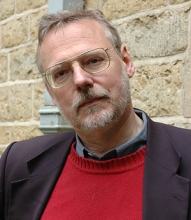
On 9 October 2026, after a brief illness, Chris Wickham passed away. He was Professor Emeritus at the University of Oxford, where he had held the prestigious Chichele Professorship of Medieval History at All Souls College. This cruel and unexpected illness has left the community of historians dismayed. The many obituaries written around the world to commemorate his work and his inestimable contribution to the transformation of historical studies reveal a deep admiration for his tireless labour and for the far-reaching resonance of his research and interpretations, together with sincere grief at his sudden loss.
A figure of undisputed prominence in global medieval studies, Chris Wickham was born in 1950 in Rossett, Wales, and gained his PhD at Oxford in 1975. His interest in the history of early medieval Italy was evident from the outset of his doctoral research, which was based on a meticulous and innovative survey of the Tuscan charters of the eighth to tenth centuries. His first monographs, Italy in the Early Middle Ages (1982) (1982) and The Mountains and the City (1988), clearly illustrate his interest in economic and social history and his interpretative approach, which sought to observe and probe the processes by which early medieval societies were formed, through the relationships between individuals situated within the places they lived in and inhabited.
From 1977 to 2004 Chris pursued his academic career, from Lecturer to Professor, at the University of Birmingham, and in 2005 he finally returned to Oxford to take up the most eminent chair in the United Kingdom, the Chichele Professorship, which he held until 2016. The move to Oxford stimulated in him a desire to combine his research with direct engagement in the life of his university. From 2006 to 2009 he was Chair of the Faculty of History and subsequently, from 2015, Head of the Humanities Division. Research and institutional commitment, thanks to his formidable capacity for work, nonetheless allowed him to continue to build and strengthen his relationships with the universities and research centres that he had frequented assiduously at the start of his career, whether as Visiting Scholar or as adjunct professor: in Italy, the Scuola Normale Superiore of Pisa, the Universities of Siena and Florence; in France, the École des Chartes and the Collège de France; in Spain, the Universitat Autònoma de Barcelona and the Universitat de Girona; in Argentina, the Universidad de Buenos Aires.
Over a career spanning four decades, his research interests ranged from Italian history across the broad chronological span from the early Middle Ages to 1250; to comparative European history (Framing the Early Middle Ages: Europe and the Mediterranean, 400-800, Oxford, 2005, for which he was awarded the Wolfson History Prize in 2006, the James Henry Breasted Prize of the American Historical Association, and the Isaac and Tamara Deutscher Prize) and the Mediterranean world (The Inheritance of Rome, 2009) and finally to global history, viewed through the lens of social history and pursued through the critical scrutiny of written and archaeological sources, above all those relating to the production and distribution of pottery. Within this vast field, Chris Wickham carried out detailed analyses of regional spaces and urban centres in Italy from the early Middle Ages to the beginning of the thirteenth century, and developed, in a comparative key, new socio-economic and socio-political models for the late antique, early medieval and central medieval periods. Finally, in a joint work with the anthropologist James Fentress, he analysed the processes by which social memory is constructed, ranging from the age of Gregory of Tours to the present day, showing how 'speaking of' and 'remembering' constitute key elements in the building of communities, and an instrument of communal resilience (Social Memory, 1992).
His research had more recently turned to exploring the Mediterranean in the eleventh century and observing the transformation of exchange from Spain to Egypt, drawing on papyrological documentation and archaeological excavation. At the heart of this work lay the connection between large-scale trade and regional commerce, with the aim of grasping the functioning of pre-capitalist economic systems. This latter theme was the subject of the lectio Magistralis that Chris Wickham delivered at the University of Padova on the occasion of the conferral of an honorary master's degree in November 2017, entitled 'The Donkey and the Boat', from which the volume of the same name (Oxford, 2023) would later develop.
Chris Wickham had an exceptionally high sense of the historian's vocation and of the duties it entails. He therefore held countless institutional roles and positions of cultural leadership, such as that of editor of the prestigious journal Past & Present (from 1994 to 2009). He never shied away from the crucial moments in which problems connected with research assessment and the life of institutions had to be resolved. As testimony to the esteem and respect in which he was held, one cannot fail to mention his role as virtually the sole assessor for medieval history across the whole country in the first edition of the British REF (2005–2008, and then from 2011 to 2014), as well as his temporary role as Director of the British School at Rome, to which he was called, in the midst of the pandemic, to resolve a delicate organisational and managerial problem. Chris resolved it with great effectiveness and in a relatively short time, leaving the institution with a future of flourishing and harmony that still distinguishes it today.
His open and cordial character and his lively intelligence enabled him to engage with a wide range of colleagues, including those of very different ages. His generous and curious personality allowed him, over time, to become an indispensable point of reference for younger generations of scholars too, with whom he always wished, and knew how, to debate and exchange ideas with sincere interest. For all of us, Chris Wickham was simply Chris, Chris par excellence.
Chris leaves an immense void for those who had the great fortune to know him and to be his friends: for everyone he was a precious presence; for each of us he was 'our' Chris, with whom we shared different and unforgettable moments and places.