

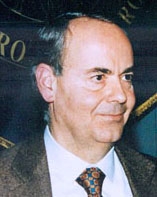
Paolo Galluzzi was undoubtedly one of the leading historians of science of recent decades and an extraordinary cultural organiser. Above all, he championed the application of new information technologies to the study of the major figures in scientific thought in the modern and contemporary periods. One need only visit Florence and the Museo Galileo, with its exceptional digital research centre, to appreciate just how far-sighted Galluzzi was in every respect. In Italy, the only person whose vision in this field can be compared with his is Paola Barocchi, who founded CRiBeCu at the Scuola Normale Superiore (the Centre for Computer Research in Cultural Heritage).
In this field, Galluzzi was unquestionably a pioneer, and his extraordinary work earned recognition not only in Italy but also internationally. This was one of the most important and distinctive features of his personality: Galluzzi always operated on an international level, establishing relationships with the world's leading centres of history of science and teaching at major universities in Italy and across Europe. It was a choice he had made at an early age and reinforced in his mature years. Significantly, he was also a member of the committee responsible for awarding the Nobel Prize, an indication of the international standing of his reputation and of the esteem in which he was held both in Italy and abroad. In this respect, he was unquestionably an exceptional figure.
Yet to stop here in recalling Galluzzi would mean overlooking some of the most important aspects of his personality, beginning with the ties he had forged during his university years with a master such as Eugenio Garin. Galluzzi graduated under Garin's supervision with a thesis involving Galileo, thus embarking on a line of research that he pursued until the final months of his life. Even in his very last period, he was working on a portrait of an ‘everyday’ Galileo, seen through the experience of his daily life and not merely in the light of the great texts he had written and the revolutions he had brought about through his extraordinary intellectual genius.
Galluzzi remained attached to Garin throughout his life, but in a relationship characterised by freedom and intellectual independence, just as Garin himself would have wished. In this respect, Galluzzi remained faithful to the teaching of Garin's own master, Ludovico Limentani, who advocated his pupils' right to make mistakes: they should be left free to err and to learn in the course of the work they were undertaking.
Another great figure played a role in Galluzzi's intellectual and personal life, to whom he was perhaps, in certain respects, even more closely attached than he was to Garin: I am referring to Tullio Gregory, who supported him throughout his academic career and brought him into the Accademia dei Lincei as a Corresponding Member of its Fifth Class, devoted to philosophy.
Galluzzi had met Gregory at the Lessico Intellettuale Europeo, a CNR research centre initially established within the Faculty of Humanities at the University of Rome ‘La Sapienza’. The centre deserves extraordinary credit for profoundly transforming the study of the history of philosophy and, more broadly, the history of culture, by emphasising the essential value of authors' vocabularies and conceptual lexicons. These were recognised as an exceptional resource for analysing the structure of texts in new and original ways.
I believe it would be worth reflecting on the role played by the Lessico in Italian and European intellectual life – and I emphasise European, because Gregory, like Galluzzi, always worked within an international, and particularly European, framework, engaging the leading research centres and the most important scholars across the continent who were pursuing similar objectives. One need only look at the Lessico's publication catalogue, especially during Gregory's directorship, to appreciate the remarkable work accomplished in those years.
It was within the framework of the Lessico that Galluzzi prepared a work which, in time, proved fundamental: a study of a specific entry, Momento, with particular reference to Galileo. The volume has just been republished in English, in an edition that Galluzzi wished to dedicate to Gregory: the master and friend with whom he had shared important intellectual, scientific and human experiences.
Two authors, in particular, stood at the centre of Galluzzi's work: Galileo and Leonardo. He studied and interpreted them from a new perspective, making intelligent and perceptive use of information technologies. This approach earned him international recognition. Just a few months ago, the Leonardotheka was presented in London, where it met with extraordinary success.
Galluzzi also showed considerable interest in the history of the Accademia dei Lincei, particularly in the figure of Federico Cesi, to whom he devoted important studies. He also approached, from an original perspective, the history of reform-minded Catholicism between the late nineteenth and early twentieth centuries, publishing an important book with Edizioni della Normale.
Not all scholars are passionate about the organisation of research, and even among those who are, not everyone possesses the foresight and ability to act on such a scale as Paolo Galluzzi did throughout his long career. His achievements also included building an extraordinary personal library, which he decided to bequeath to the Istituto Nazionale di Studi sul Rinascimento. In doing so, he affirmed the value of an intellectual and human solidarity cultivated over many years, centred on an exceptional master such as Eugenio Garin.